Why a slab behaves the way it does
Concrete takes up some water, but next to carpet or drywall it gives most of it back at the surface. In a warehouse that makes the first job a volume job: move a lot of water off a lot of floor. Joints, cracks, coatings and low spots decide where water collects, and a slight slope can pool it at one end of a bay.
Extraction equipment is usually sorted by scale. Small handheld units suit offices. Larger portable units and truck-mounted systems handle open floors. The right mix depends on depth, area, how equipment gets in, and what debris is in the water. You don't need to pick the machines, but knowing the categories helps when a professional walks you through a plan.
Big floors also raise problems small jobs never do. Equipment has to get past racking, columns and dock levelers, and power or fuel has to be set up safely. Water trapped under staged pallets or in aisle corners may need to be squeegeed out by hand. When the water came from outside, silt settles as it recedes, clogging pumps and leaving a film, so cleaning can take as long as removal. Ask how a plan handles those details rather than which machine it uses.
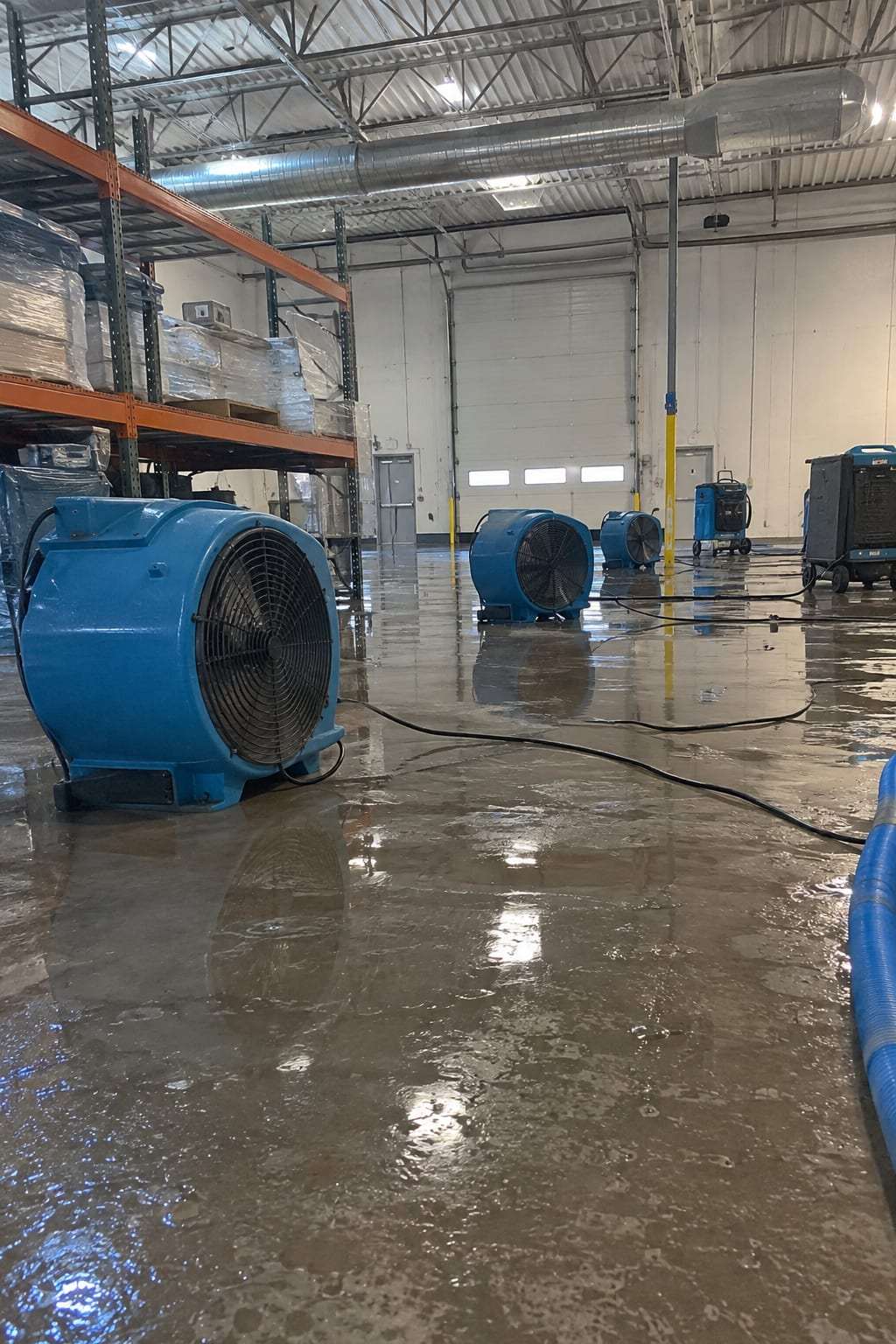
Terms you'll hear on site
- Extraction
- Physically removing standing and surface water. Usually the first mechanical step.
- Squeegeeing
- Pushing water toward one collection point so it can be pumped or vacuumed up.
- Air movement
- Fans that push air across wet surfaces so the moisture evaporates.
- Dehumidification
- Pulling moisture out of the air so surfaces keep drying instead of stalling.
- Moisture reading
- A measurement taken in a material to track whether it's getting drier.
The usual order on a flooded slab
Clear the floor
Move pallets, carts and debris so water and equipment can travel.
Remove standing water
Pump or vacuum the bulk of it, working toward the low points.
Clean the residue
Mud, grit or a chemical film may need cleaning before the floor counts as done.
Dry the building
Run air movers and dehumidifiers, especially where office walls and stored goods share the same air.
Confirm it
Take readings over several days until the floor and the materials around it are back in a normal range.
Common questions
Does concrete need replacing after a flood?
Rarely because of water alone. The real questions are about coatings, contamination and structure, and a qualified professional should assess those.
Why do dehumidifiers matter in a warehouse?
Damp air slows drying for everything in the building, including the offices and the stored goods.
General information for Commerce City, not a quote or professional advice. In an emergency, call 911.