Draft guide. No phone line or request form is connected.
For warehouses, distribution centers and industrial buildings
Warehouse flood cleanup and water extraction in Commerce City
A sprinkler line lets go over the weekend, and Monday's first shift finds water under three aisles of racking. This guide covers what to shut off, what to move, what to photograph, and how drying gets planned around the docks you still need.
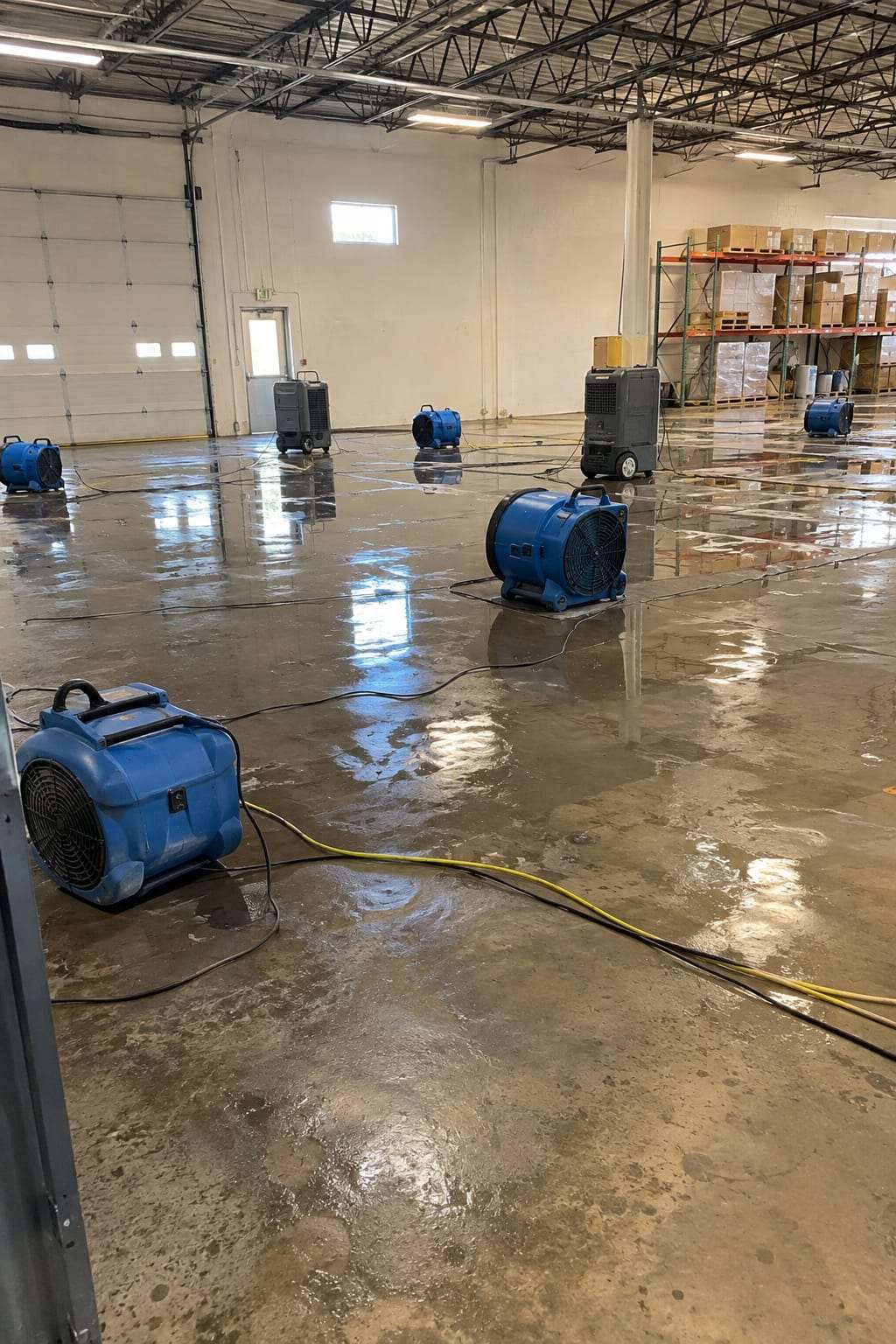
Where warehouse water usually starts
-
Fire sprinkler breaks, most often in dry-pipe systems over cold dock areas.
-
Supply lines that freeze and split near the loading doors.
-
Roof drains that back up over wide open bays.
-
Restroom and break-room plumbing in the office build-out.
-
Storm runoff pushing in under the dock doors.
Why the scale matters
A warehouse floods differently than a house
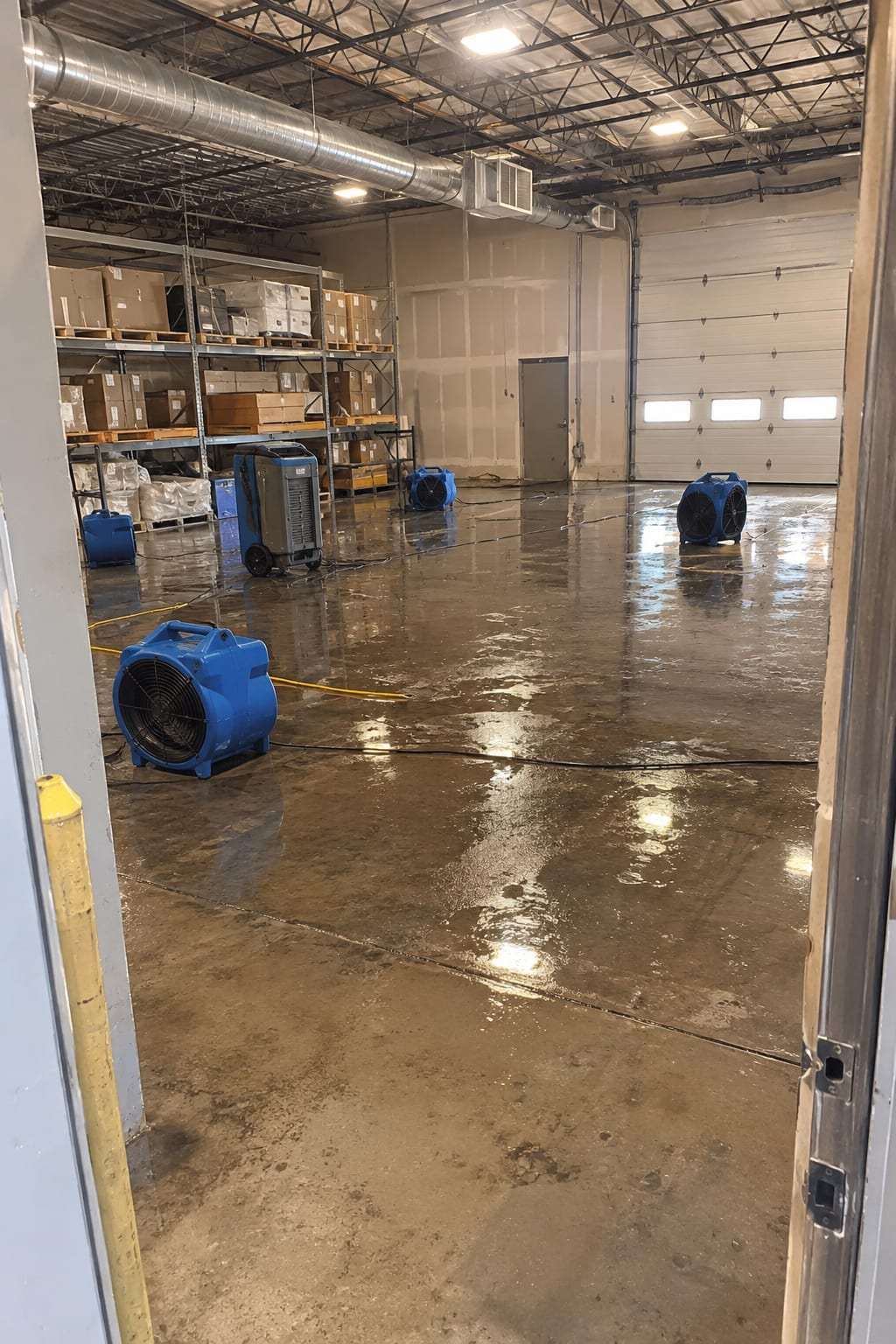
A split supply line in a house wets a room. In a warehouse the same failure can run across thousands of square feet of slab before anyone sees it, sliding under racking, into the office build-out and toward the dock thresholds.
The slab itself sheds most of the water. The damage sits on top of it: cardboard, pallets, the bottom foot of drywall in the offices, and insulation all soak water up and hold it. Cleanup means pulling water off a very large floor, keeping the dry stock dry, drying the office walls and cavities, and recording all of it for the insurance and business-interruption claims.
This is a local guide, not a sales page. Before you hire anyone, ask whether the company's own crew does the work and when it can realistically reach Commerce City.
What on the floor holds water
General behavior, not measurements from any building.
Holds water: Low
Holds water: Low
Holds water: High
Holds water: Very high
Holds water: High
Holds water: Very high
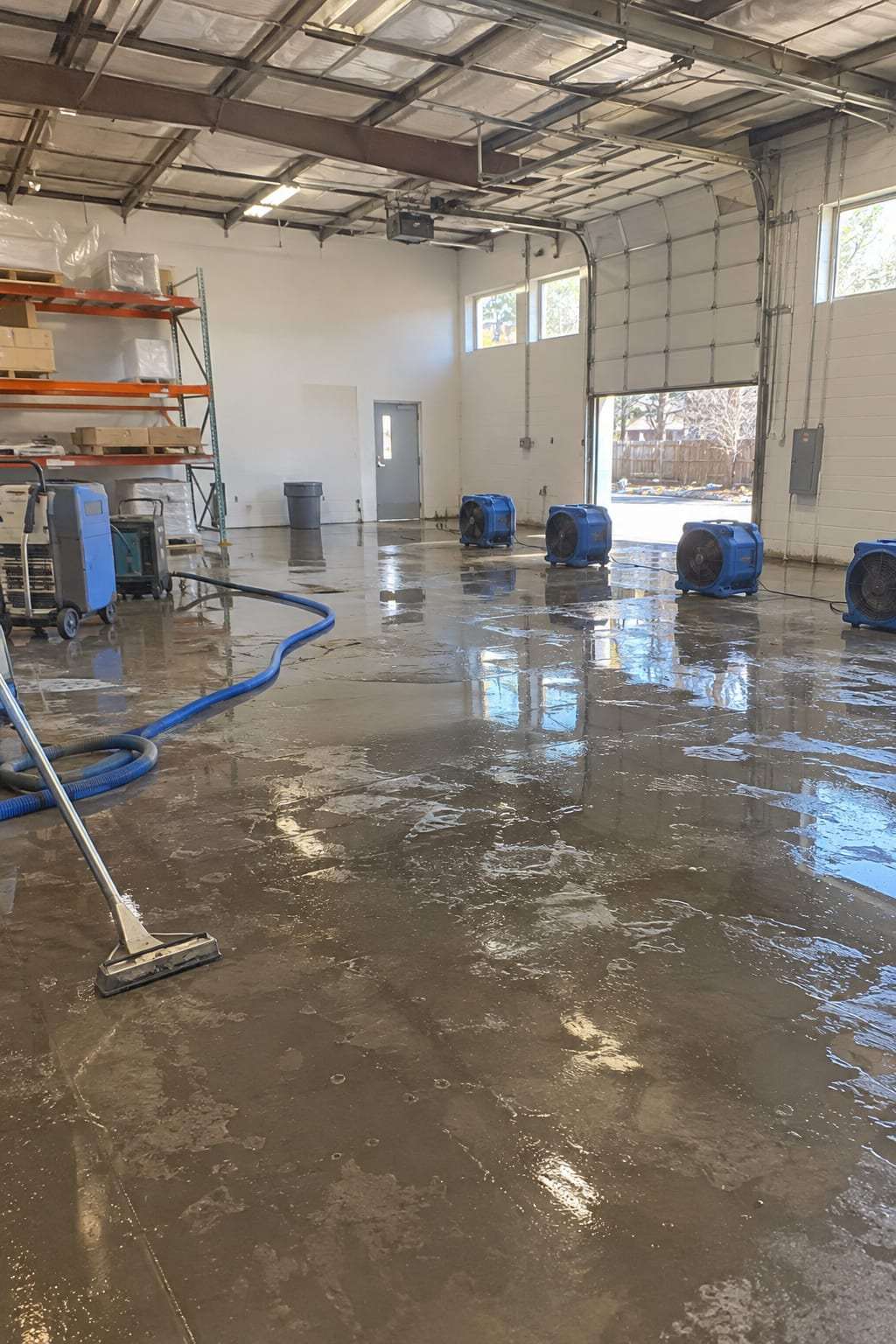
Before anyone else arrives
The first hour, for facility and operations managers
-
Stop the source
For a sprinkler event, follow your fire protection procedure before anyone closes a valve. For anything else, shut the supply that feeds the leak.
-
Get product off the slab
Lift product and equipment off the wet slab where it's safe, starting with cardboard and anything stacked low.
-
Photograph it in place
Photograph standing water and wet stock where it sits, before pallets start moving.
-
Make two calls
Call your insurer, then a commercial restoration company you have already checked.
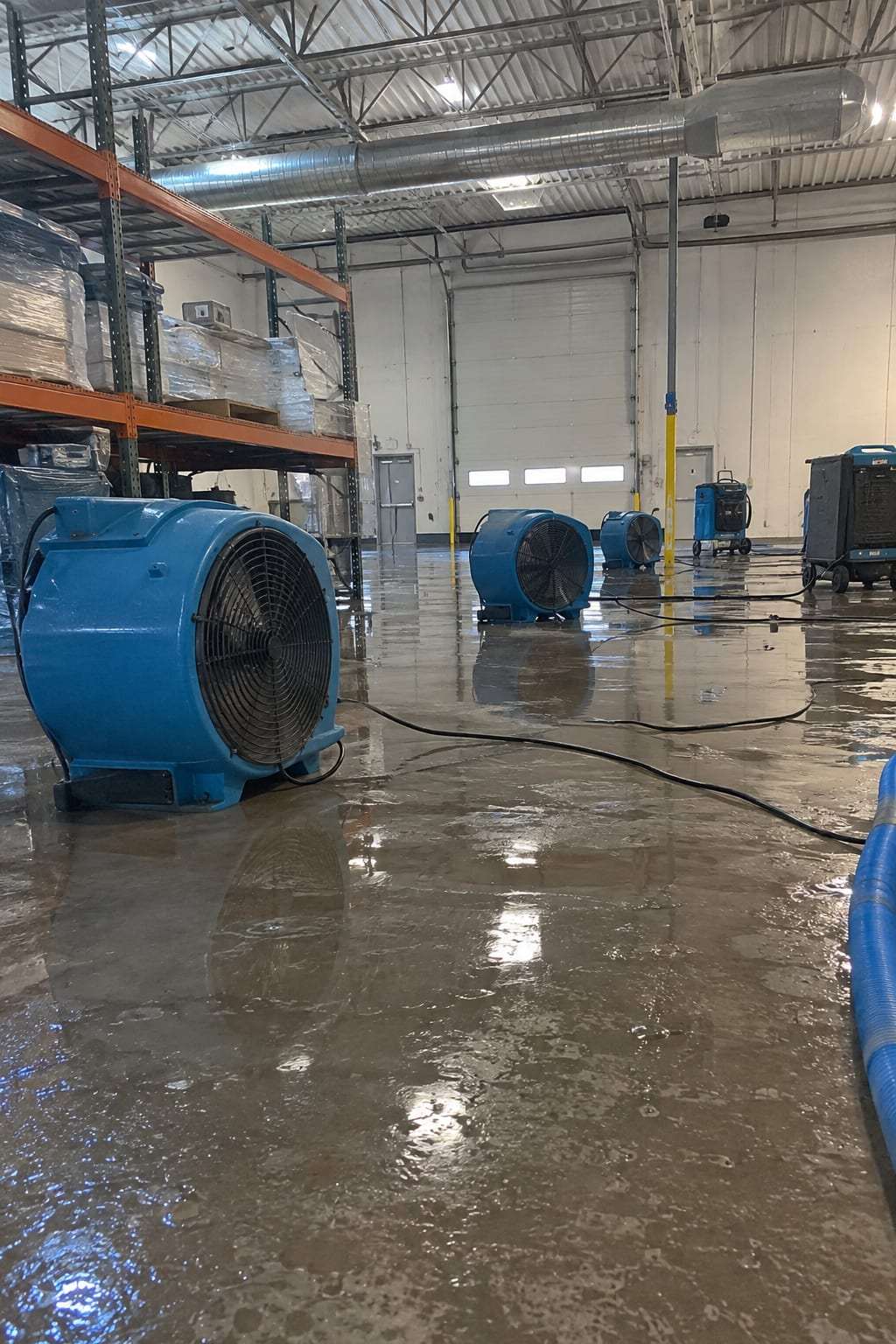
Once the source is stopped
How a warehouse dry-out usually runs
The work gets sized to the building's footprint and planned around the shifts that keep running.
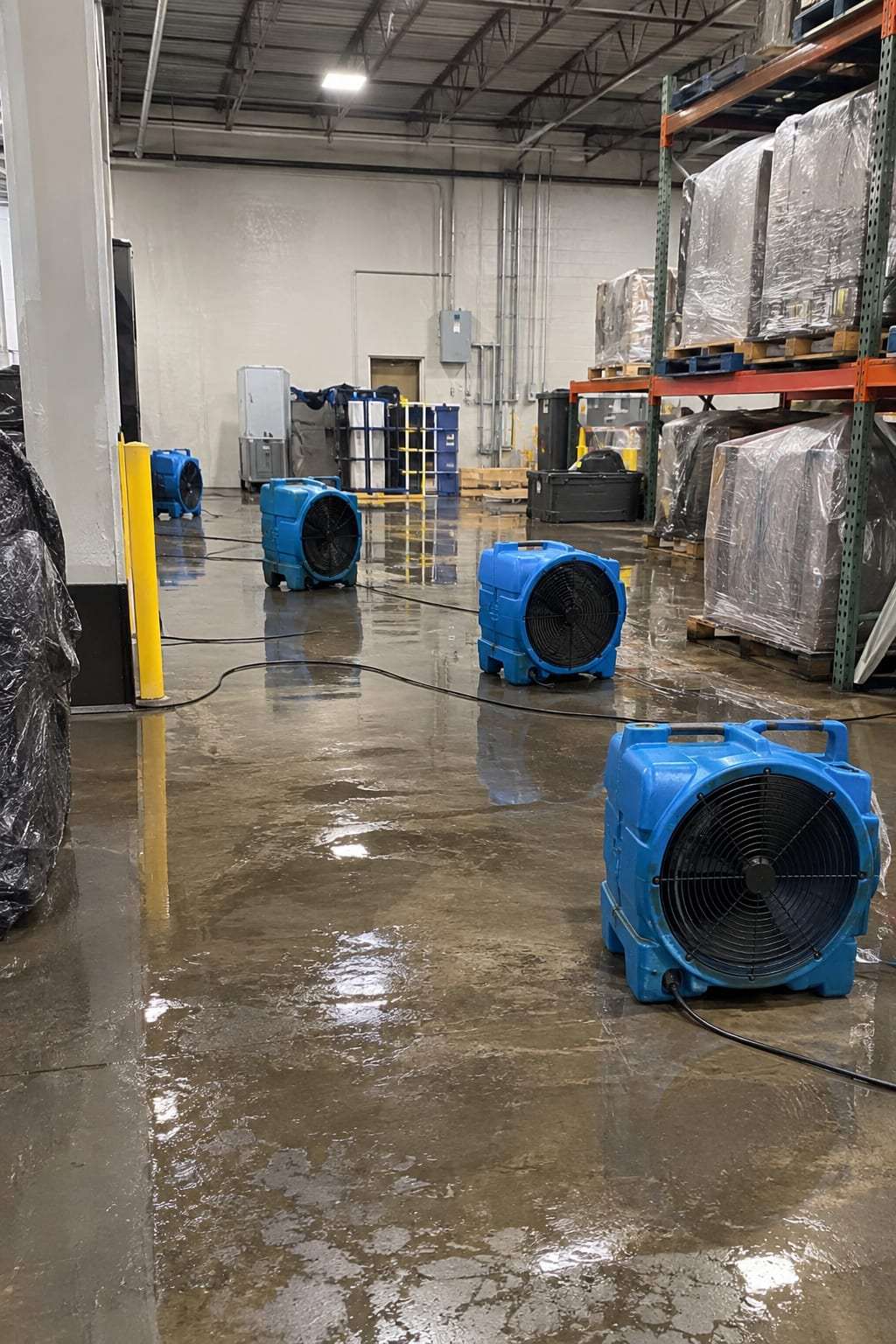
-
Assess
Map how far the water spread, which offices it reached, and which building systems sit near it.
-
Extract
Pull standing water off the slab, out of the offices and away from the dock thresholds.
-
Protect
Wall off the dry zones so receiving and shipping can keep working where it's safe.
-
Dry
Run commercial drying equipment on walls, cavities and materials, with moisture readings taken every day.
-
Document and repair
Collect the full record of readings and work, then schedule repairs once the readings say the building is dry.
Continuity plan
Keep shipping while one bay dries
An open floor dries faster than a finished room, but the building can't stop shipping while it does. Agree on zones before the equipment arrives: the wet bay dries while work shifts to the next one, and the crew checks readings between shifts.
An example layout for planning. Every building splits differently.
Agree on access up front
-
Docks and doors
Pick the doors the crew uses for equipment and debris, so inbound and outbound loads keep their own.
-
Racking
Check whether the bottom rack level is wet, and whether pallets have to come out before extraction under the racks.
-
Forklift routes
Keep material-handling traffic on routes that never cross hoses or drying equipment.
-
Power
Decide which circuits can safely run drying equipment, and whether temporary power is needed.
The biggest line on the claim
Record the inventory before it moves
Damaged product is often the largest part of a warehouse claim, and it's the easiest part to lose track of once crews start shifting pallets.
Use the inventory loss logMoisture and drying
Measure it, map it, then dry it
Dry to the touch is not dry. Readings tell you where the water went, what can be saved, and when a floor or wall is ready to close up.
-
Moisture assessment
Readings on slab, walls and air show how far the water spread and what still holds it.
Read more -
Moisture mapping
Mark reading points on a floor plan and track them daily, so drying decisions rest on numbers.
Read more -
Structural drying
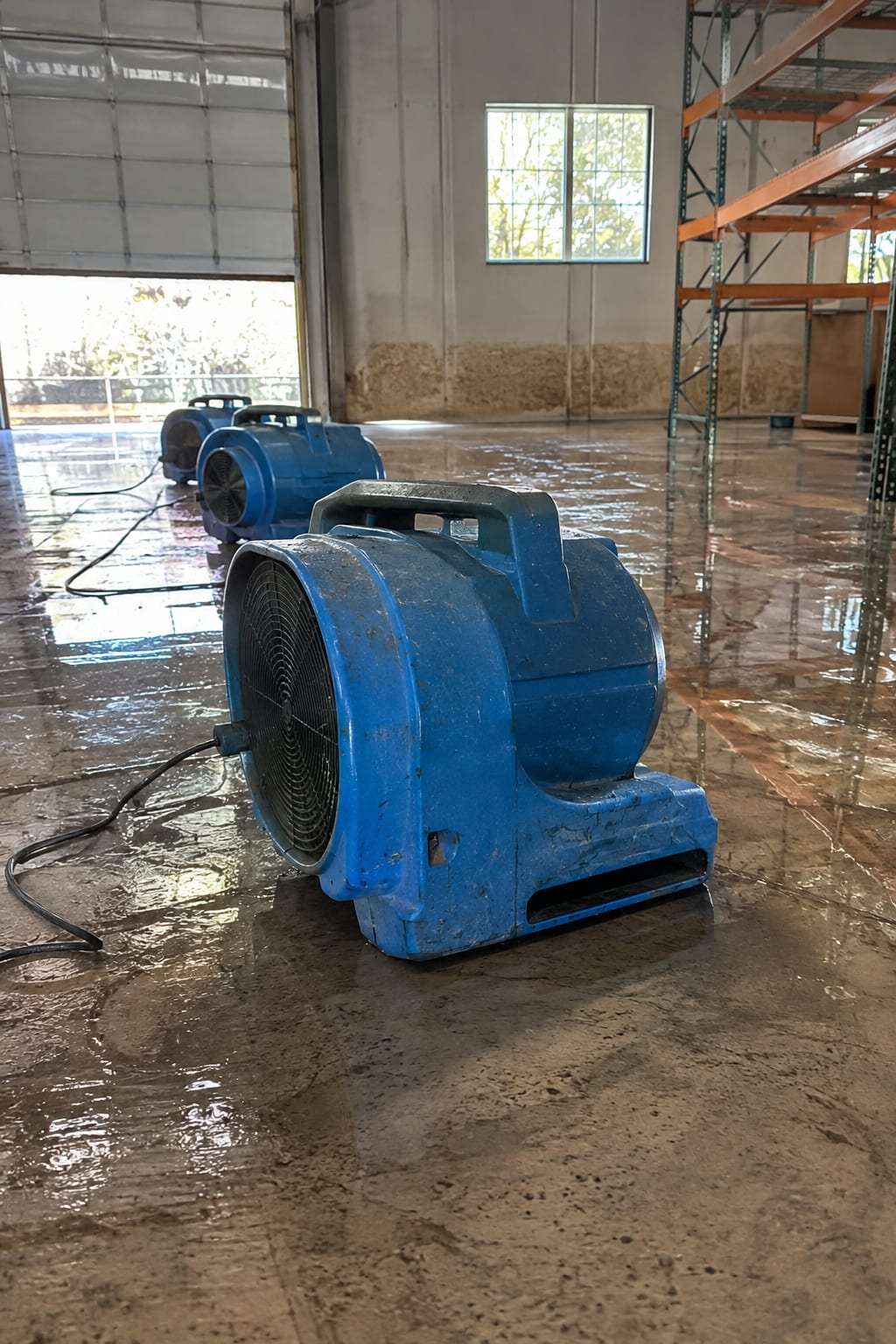
Air movers, dehumidifiers and zoning for big open bays without shutting every dock.
Read more -
Hardwood floor restoration
Office hardwood cups and buckles when wet. Fast extraction and controlled drying decide whether it can be saved.
Read more
Commerce City, Adams County
Why Commerce City buildings take on water
Commerce City sits in Adams County, directly northeast of Denver, and is one of the metro area's main industrial and logistics centers. Warehouses, distribution buildings and manufacturing plants line I-270, I-76 and the rail corridors.
Most of these buildings pair big open bays and dock doors that face Colorado winters with finished office space inside. Frozen lines at the docks and wet drywall in the offices come out of that pairing, and they show up again and again in the situations this site describes.
- Ask any company to confirm in writing that your Commerce City facility is inside its service area.
- Dry-pipe sprinkler systems need their maintenance done before the first hard freeze.
- A hazardous-material spill needs a separately licensed environmental contractor.
- The same advice holds for buildings in nearby Denver, Henderson and Brighton.
ZIP codes this guide covers: 80640 (Henderson), 80022 (Commerce City).
Also nearby: 80216, 80266, 80207, 80229, 80238, 80205, 80221, 80202, 80220, 80211, 80260, 80206, 80239, 80218, 80030, 80203, 80010, 80233.
Go deeper on warehouse water
Guides and checklists for docks, racking, sprinkler events and inventory records.
Guides18
- Frozen and burst supply lines near loading docks
- Business interruption planning for warehouse flooding
- Choosing a commercial water restoration company
Before you hire anyone
Warehouse questions
What a first call usually covers
A careful company will ask about the building, the source, how far the water spread and how its crew gets in. Ask who is coming, roughly when, and what equipment they will bring for a floor your size.
Questions facility managers ask before work startsWhat equipment does a large warehouse floor need?
Usually truck-mounted extraction plus commercial air movers and dehumidifiers. Give the square footage and rack layout on the first call so the right amount of equipment shows up.
What should happen to wet inventory?
Get it off the floor where that's safe, and photograph it first. You and your insurer decide what is salvaged or replaced, and good records make that decision easier.
Is a chemical spill the same job as a water cleanup?
No. A hazardous-material spill needs a licensed environmental contractor and may need to be reported. Water damage restoration is a separate job that comes after.
Can the building keep shipping during drying?
Often, in part. Ask for the work to be zoned so the dry bays and the docks you need keep operating.
What records should the warehouse ask for?
Photos, daily moisture readings and an itemized record of the work, which support insurance and business-interruption claims. Your insurer decides what is covered.
Will a company answer after hours?
Many say so. Ask whether a night call reaches the company's own staff or an answering service, and how soon a crew can realistically reach Commerce City.
Who decides which inventory is a loss?
You and your insurer. Product owners and carriers set the rules for food, pharmaceutical and other regulated goods. The restoration company dries the building and records conditions; it doesn't decide whether goods can be sold.
Send facility details
This form is not connected. This website is a draft preview: no business has been confirmed to receive requests, so the fields below are switched off and nothing can be sent. In an emergency, call 911.
Water on the floor right now?
Stop the source and follow your fire protection procedure. Get product off the slab, photograph it in place, call your insurer, then call a commercial restoration company you have checked.